Overthrowing a dictator. Bringing economic growth and modernization to all Mexicans. Equalizing the political environment. Such were the goals of the Mexican Revolution that began this week in 1910. Today, November 15, the event is being celebrated.
This holiday marks the beginning of the Revolution: Francisco Madero’s challenge to the stickiness of the current President’s, Porfirio Díaz’s, time in office. Díaz had spent more energy adding to the wealth of his powerful and well-heeled allies than improving the lives of his countrymen, and challengers like Madero were over it. After an initially rough start, Madero was joined by other visionaries-making-things-happen (including one Pancho Villa), and after a decade of bloody campaigns and re-strategizing, they forced Díaz to resign in 1920. A new Constitution was formed that limited presidents’ terms, reduced workday hours, and went after child labor.
Interestingly, a few months ago, I witnessed how a revolution of a different kind—the celebration of Mexico’s independence from Spain—is celebrated in CDMX. The remainder of this article focuses on that.
Deep in the heart of Mexico City’s historic center, a 150-year institution stands. It’s called La Opera, and it’s the quickest way to travel back to the late 1800s—a time of railroad building, oil industry growth, and a vastly expanded appetite for novels and newspapers. Inside this old watering hole, ornate, deep-hued fixtures dangle from the ceiling, and elegant designs are carved into the wooden seatbacks. Lanterns sway slightly overhead, their warm light illuminating the cherry-red tablecloths as diners clink glasses on a warm afternoon.
La Opera has another claim to fame that’s a bit unusual—on one filigreed ceiling panel, there’s a bullet hole donated to the establishment by the said Pancho Villa, who, while enjoying the atmosphere in the place one day, let loose his revolver and blew a slug in the ceiling. The stories conflict on whether this was out of exuberance or just point-making. Some hold that he was discouraging a gang of questionables from further rowdiness in the bar (because two wrongs make a right, of course). My favorite explanation involves him sloshing in on horseback and choosing that form of self-announcement for its “The party don’t start ‘til I walk in” utility. That version is probably the least likely though.

In pursuit of this historical oddity, my bestie and fellow random-landmark-seeker Benny and I stopped in one afternoon before heading to the markets. While enjoying a local recommendation, we found the bullet hole—it’s at the top left in the photo above, right behind the lantern chain.

September is a perfect time to visit La Opera, as Independence Day festivities are beginning to emerge all around the city. The increased level of bustle at every corner is palpable. Festive, sequined décor wave everywhere, with or without human aid. The Zocalo is attired in festive banners depicting the rise and fall of the Aztec Empire in an attempt to emphasize the country’s pre-Spanish heritage (interestingly, this year marks the 500th anniversary of the Spanish conquest).
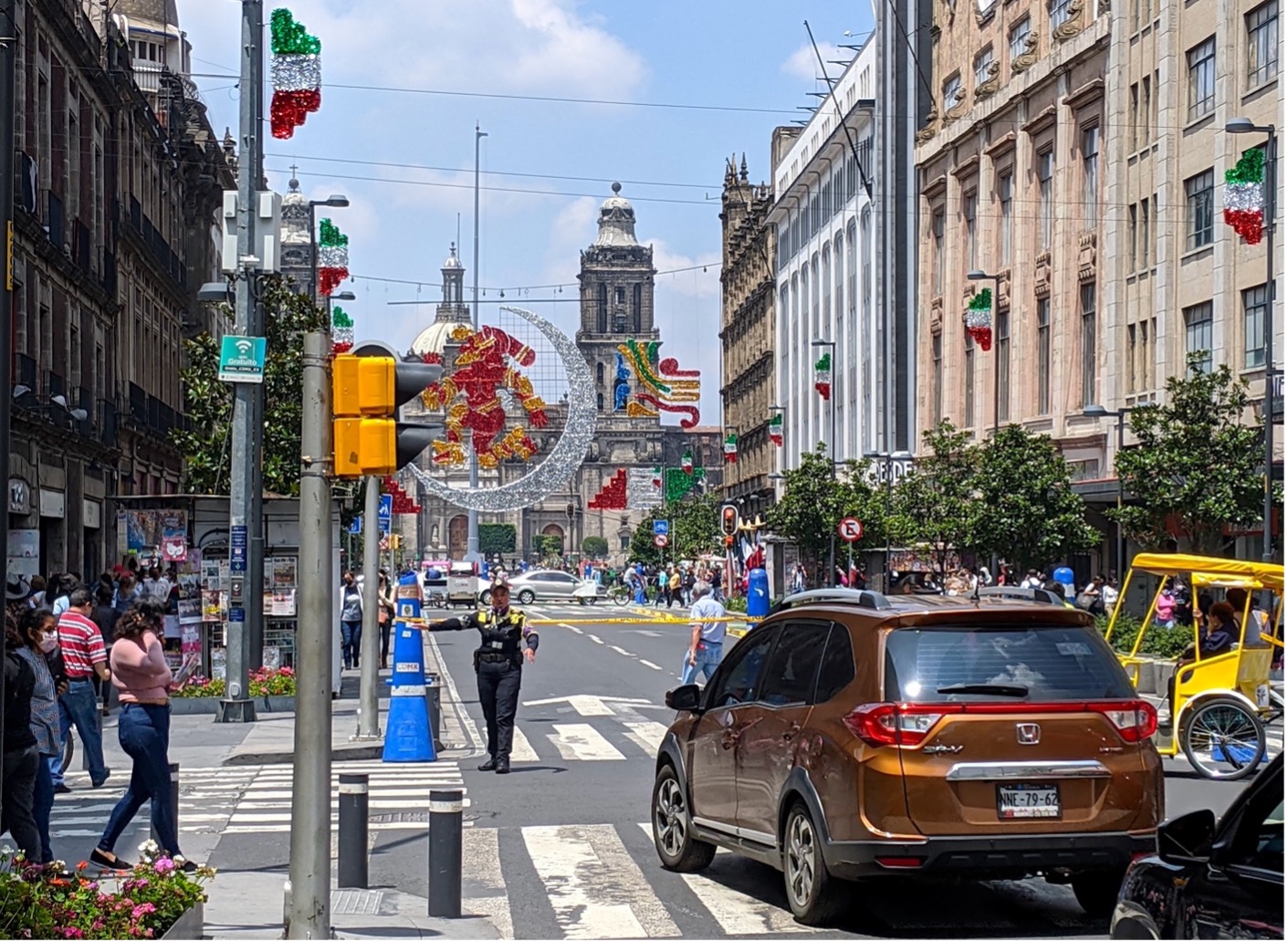
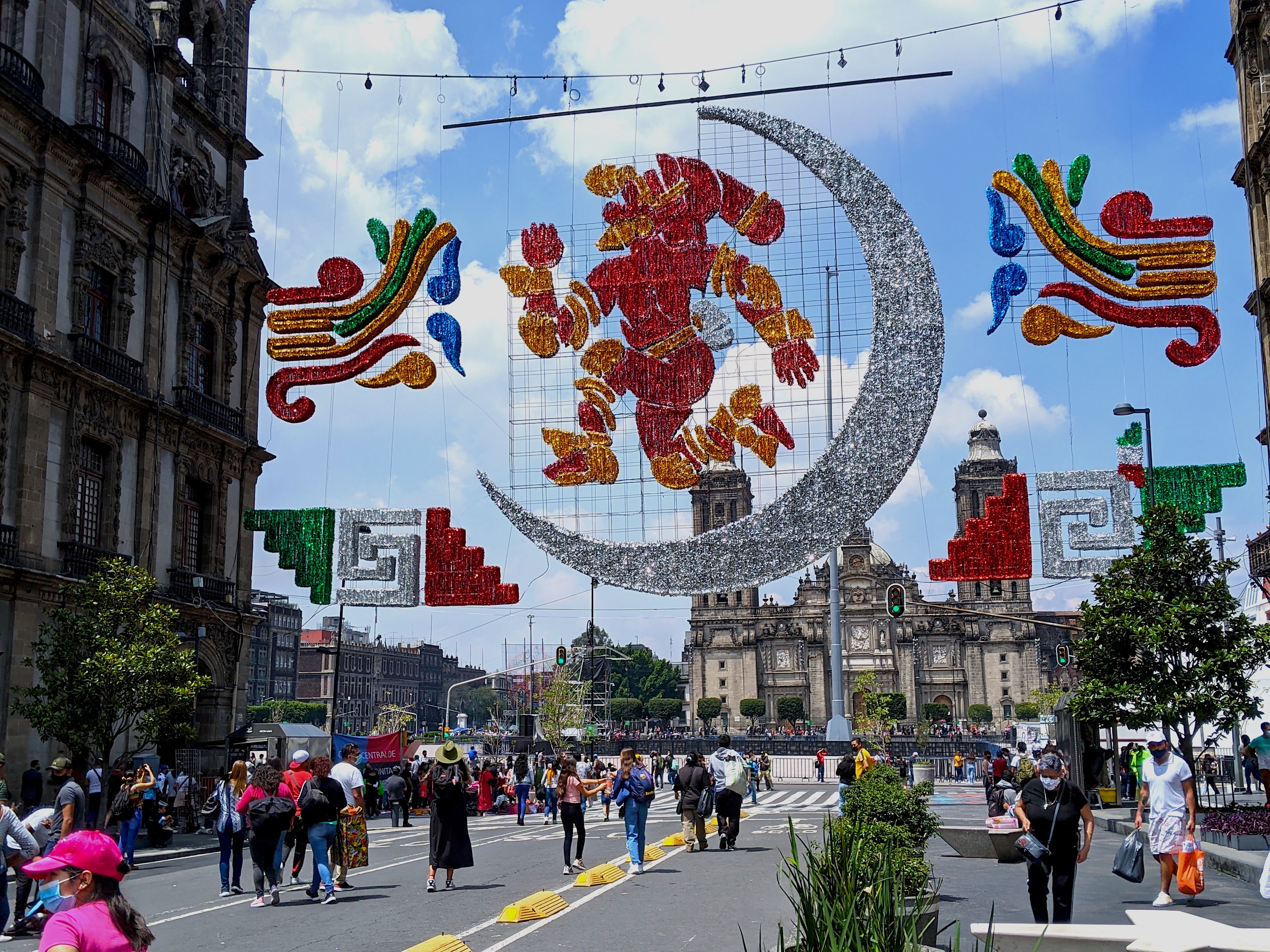
There’s a festive feeling in the air. The crowds have picked up.
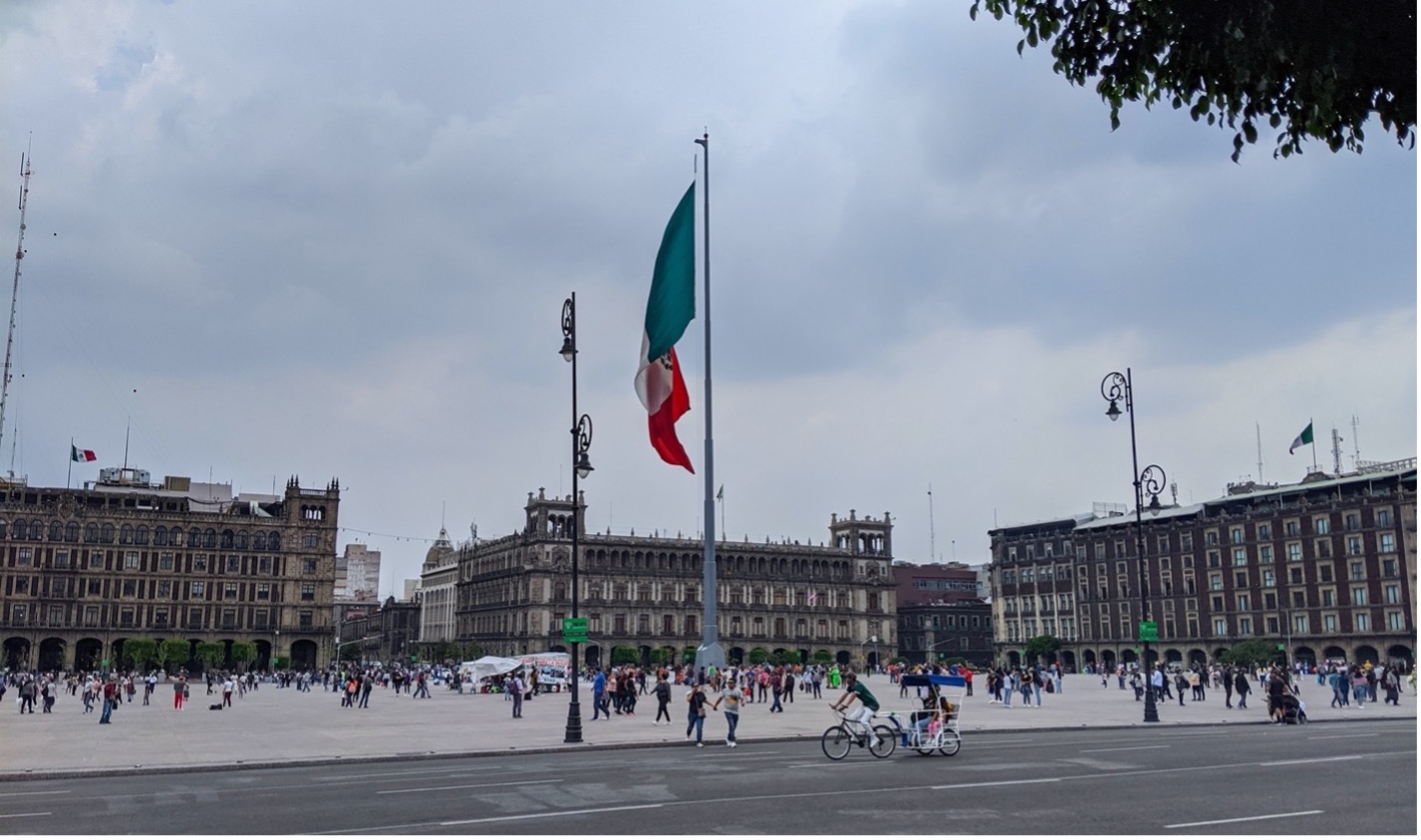
Like, really picked up.
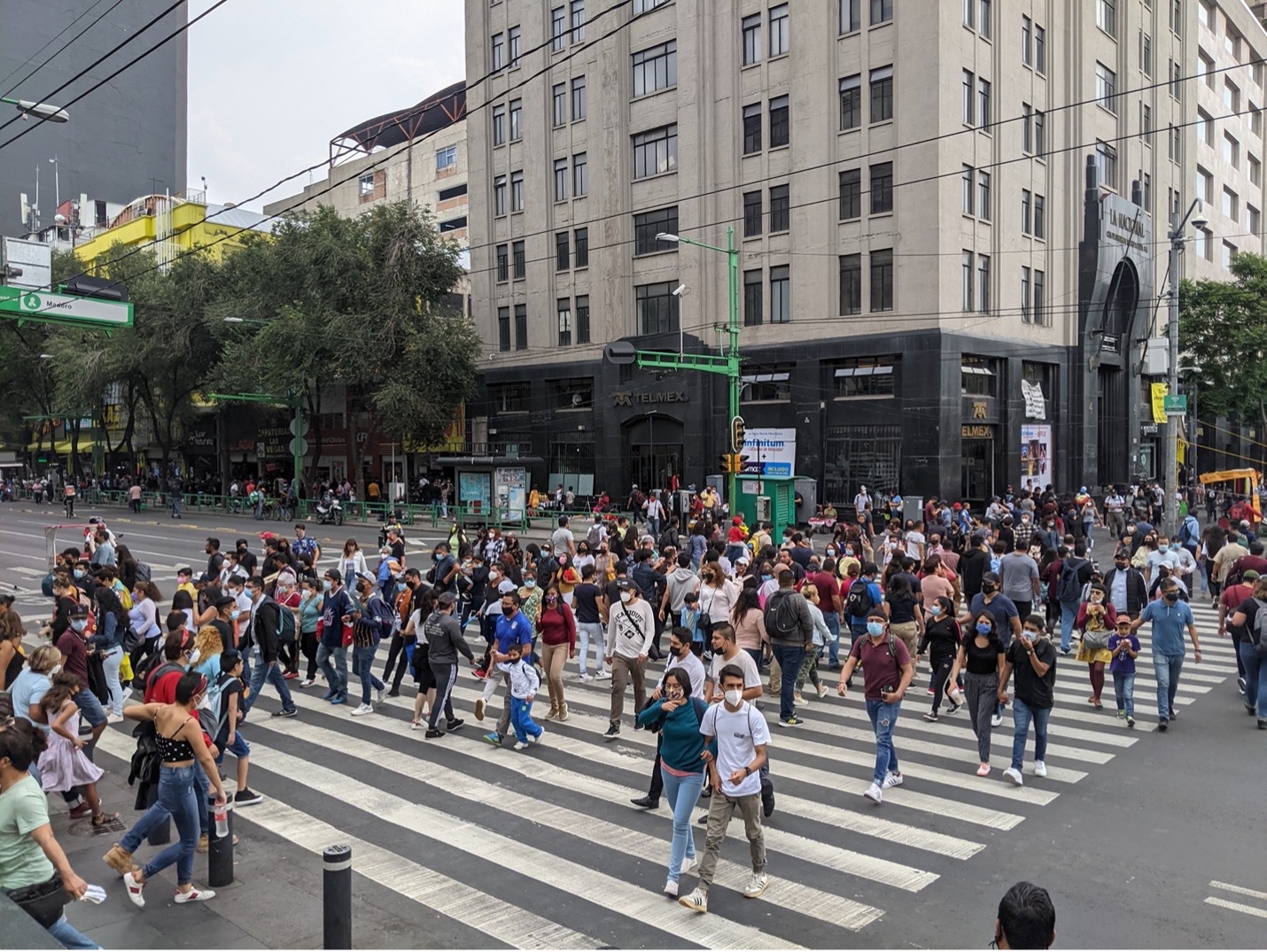
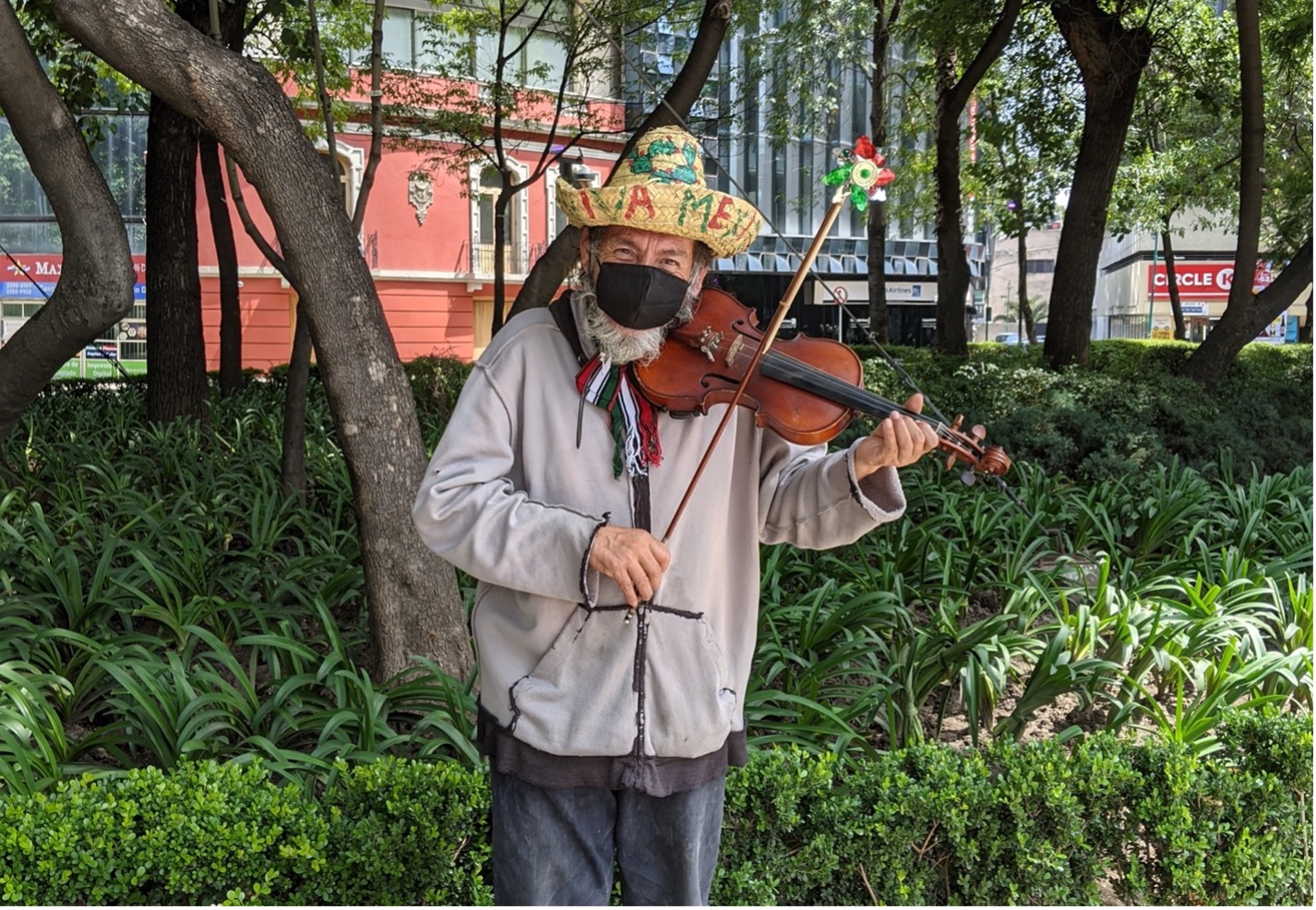
It seems music is everywhere (even more than usual!)
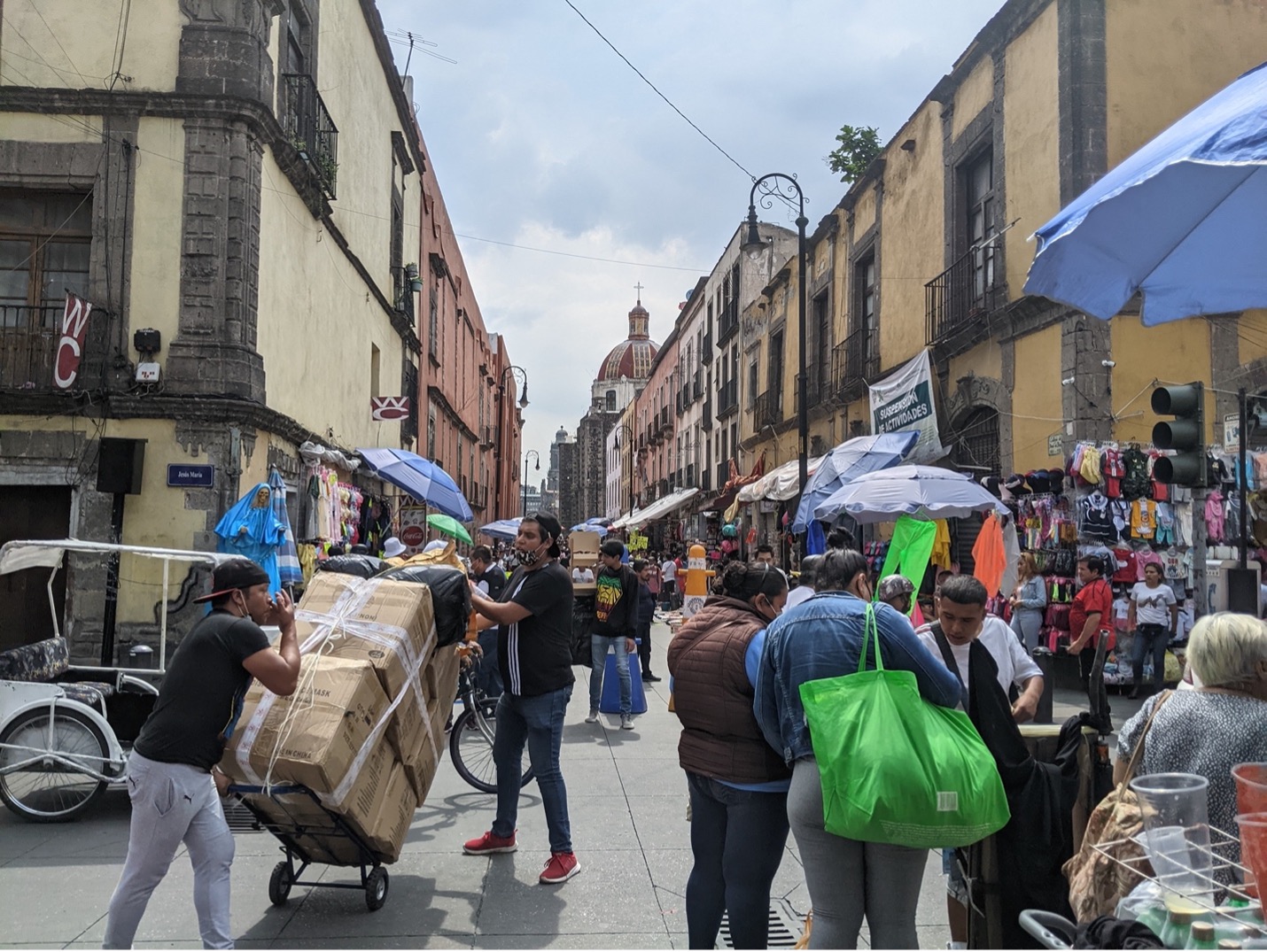
Around downtown, market vendors advertise their wares and places like the Mexico City History Museum have been given new outfits for the occasion.

Stopping into Garibaldi Square results in a pulque (an ancient drink often called a symbol of Mexico that’s made from agave and requires a fermentation process) and a few songs from patrolling mariachis.
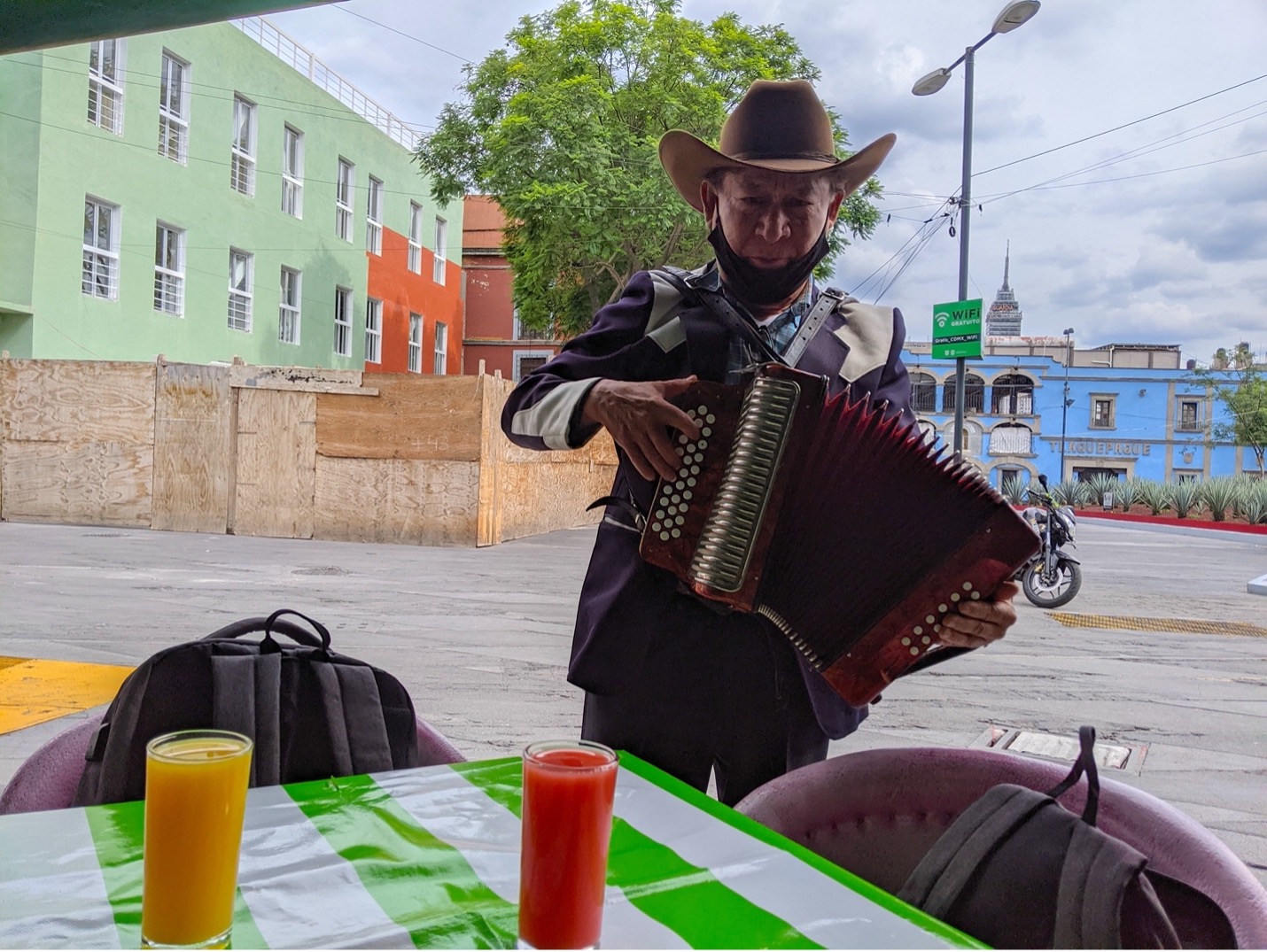
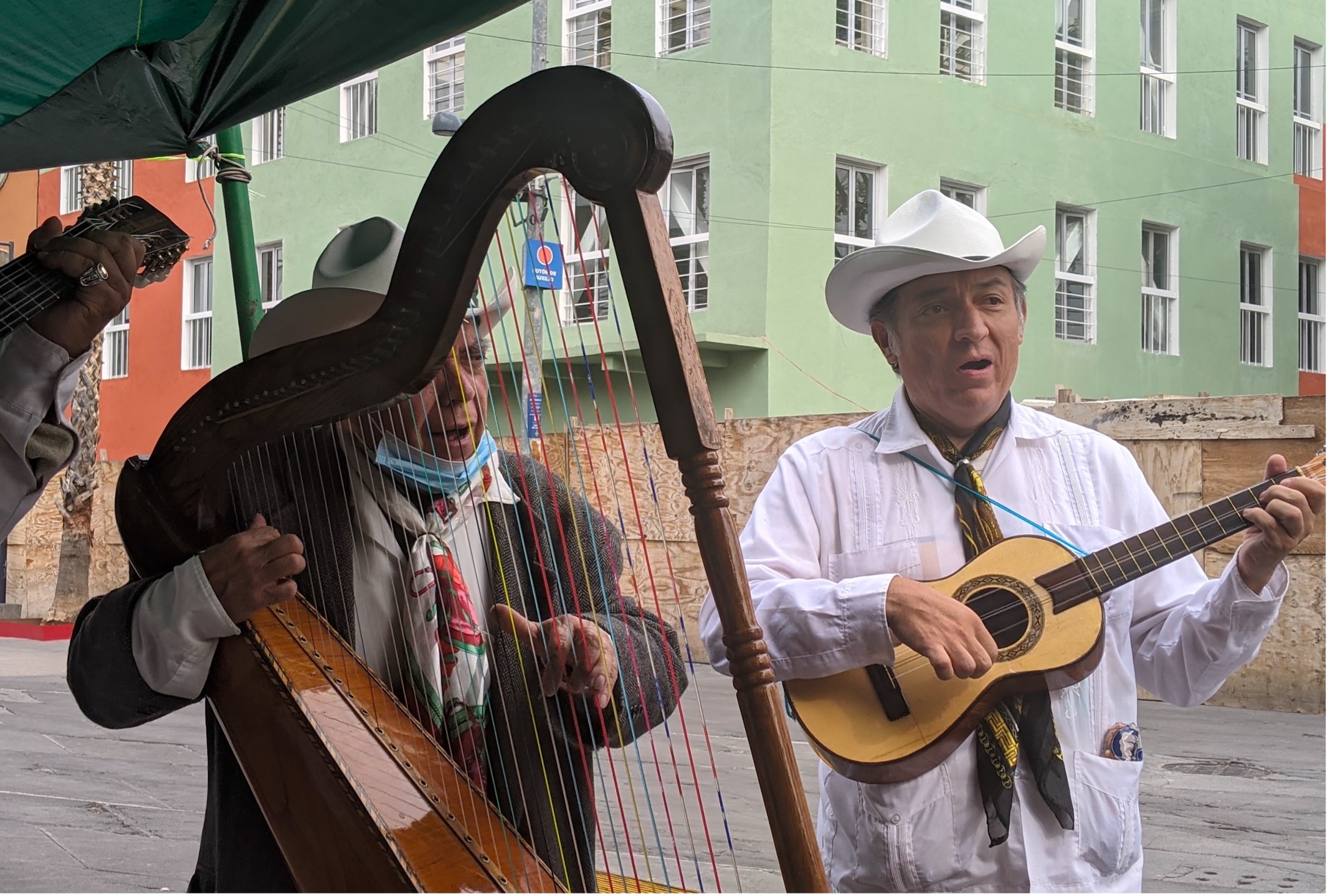
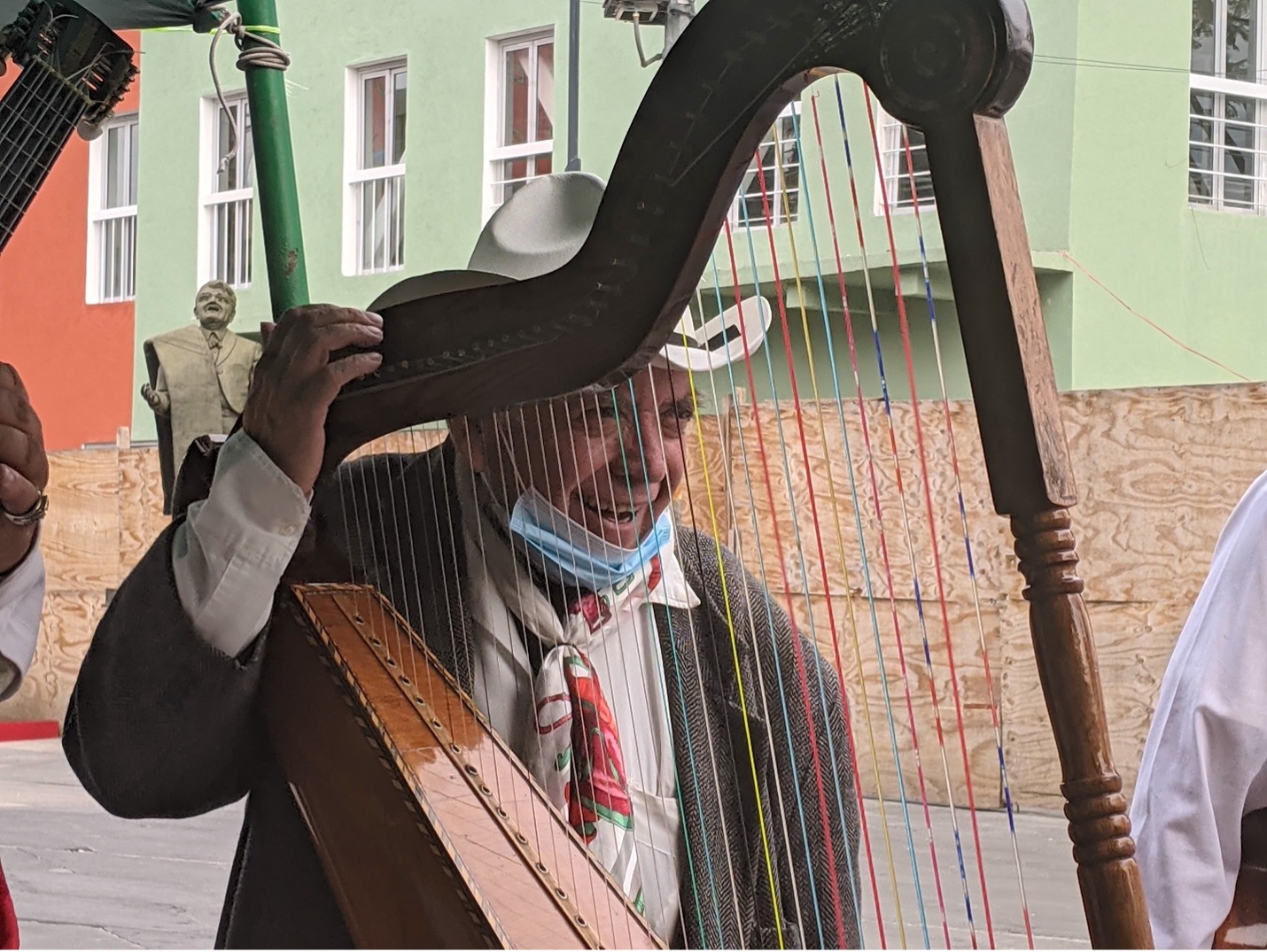
Click here and here for the full effect. And for one more, click here.
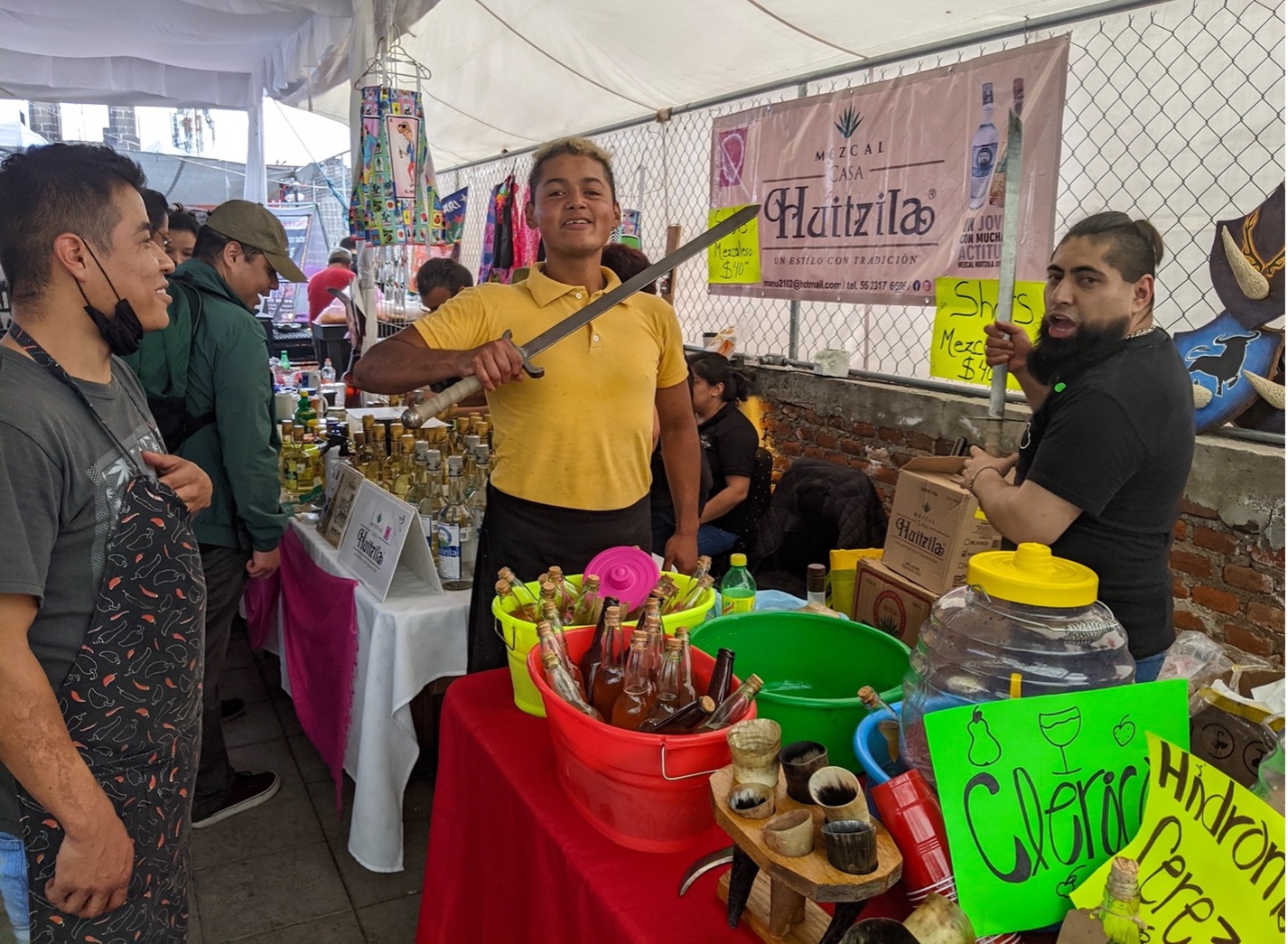
Also, community markets are big here, offering everything from mezcal, colorful textiles—and cozy views of sudden rainstorms. We visited one located high up on the top of a nearby building to see what was happening.


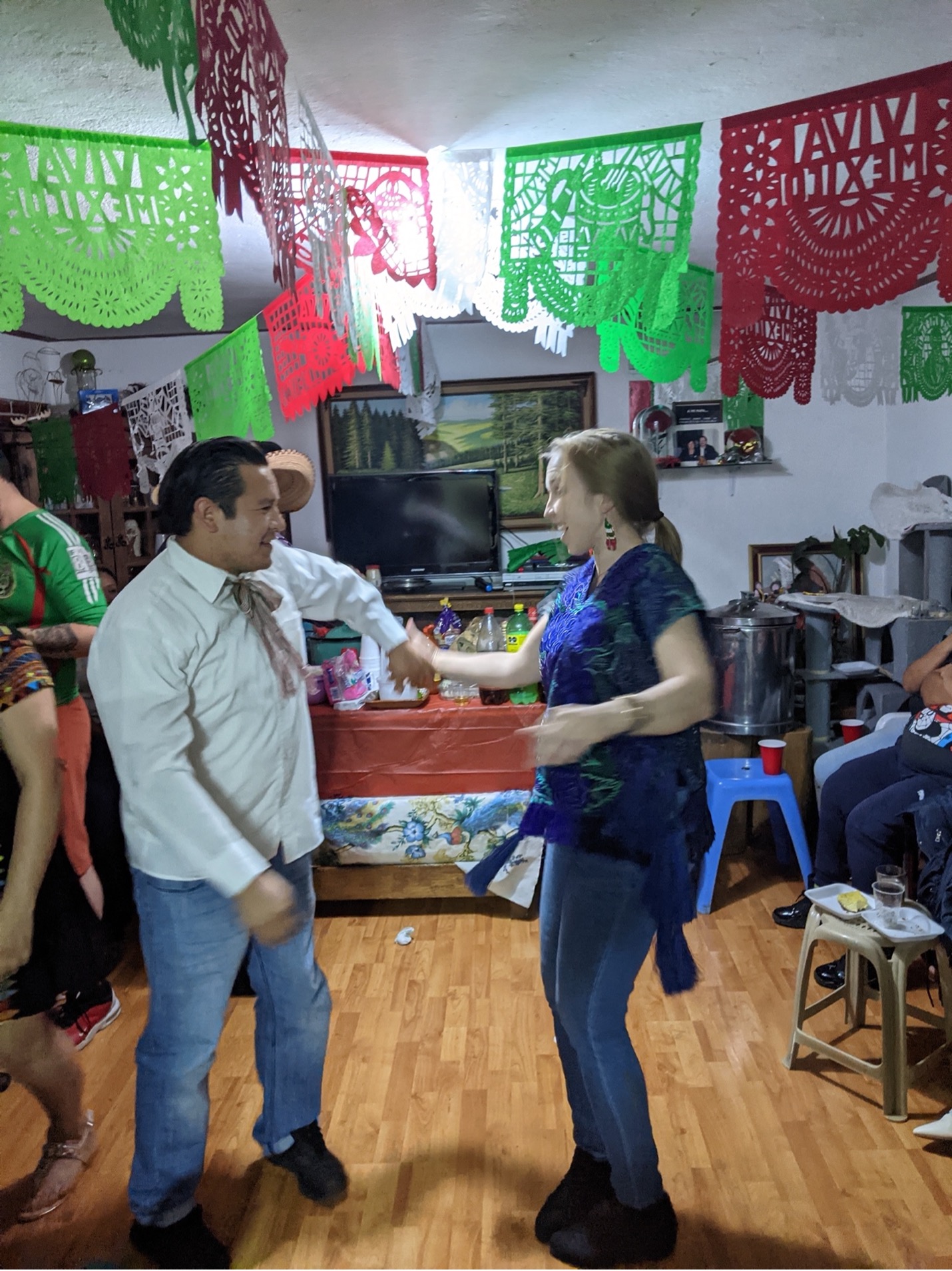
The night of the holiday, Benny’s family graciously invited me to their family celebration. It was a fascinating chance to get a real view of how the holiday is celebrated here. The night consisted of much fun with family, traditional dishes, and watching the official celebration on TV.
The elders of the family lead the group in song, and in festivewear.


I got to borrow this beautiful, traditional piece for the night.

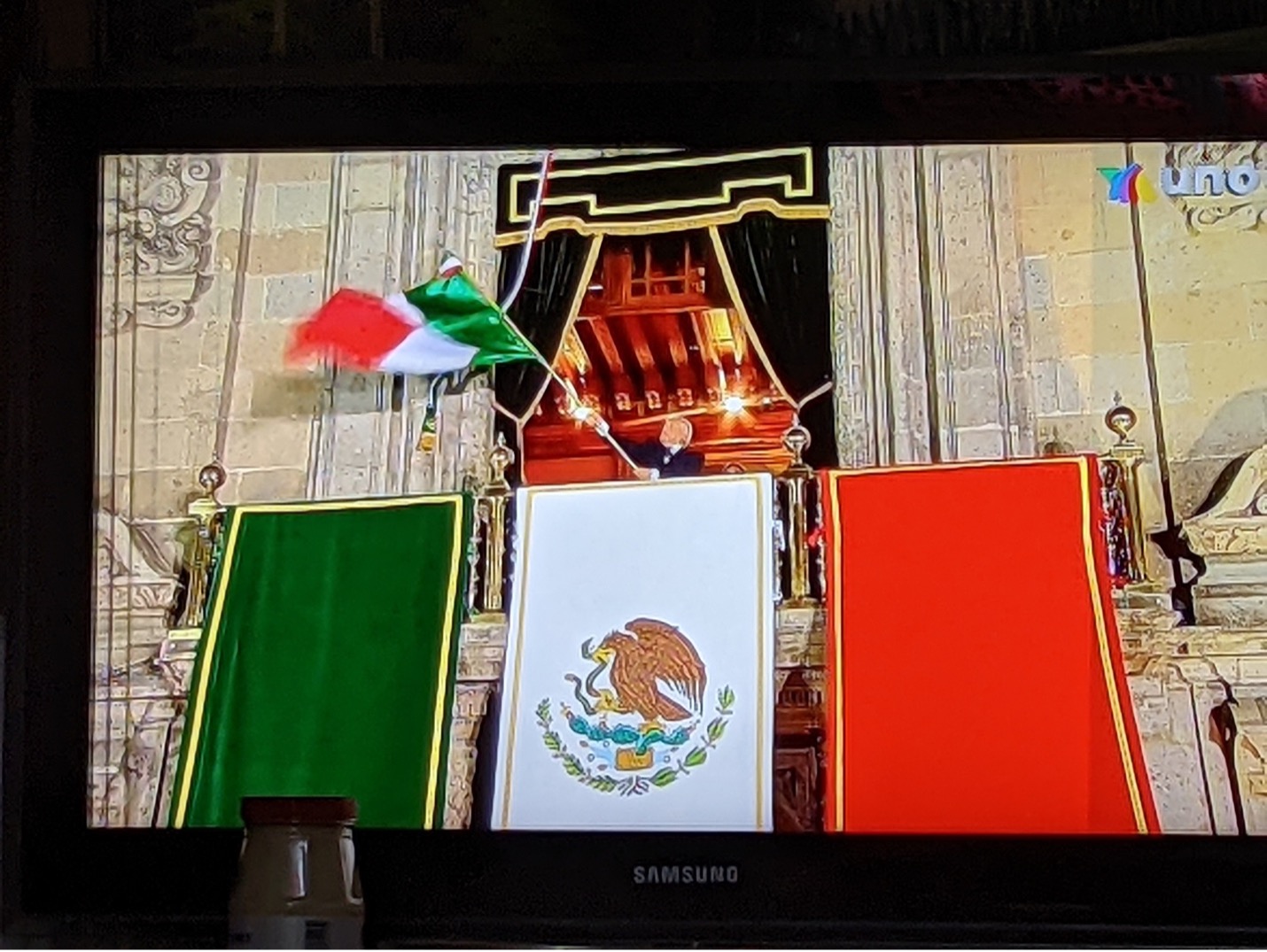
The evening’s climax involved viewing the national broadcast of El Grito de Dolores (the cry of Dolores), or El Grito de Independencia, led by President Andrés Manuel López Obrador (AMLO) from the balcony of the National Palace.

This is a traditional ceremony commemorating the parish priest of Dolores, Miguel Hidalgo y Costilla’s, impassioned call to revolt against the Spanish in 1810. Hildalgo went on to lead a small army against the Spanish before being captured and executed a year later. The message of the call, as led now by the President, is this: “Viva México! Viva la Independencia! Vivan los héroes!”
Afterwards, the family festivities recommenced, including dancing and fireworks, and were enjoyed far into the night.

 CHLOE GOES
Love the music links! Nice touch. Excellent article!
LikeLike