I’m an underground metro nerd. Figuring out a new city’s system is so exciting. Maybe it’s because I grew up next to a major theme park and never got over moving away. Maybe it’s the color-coding of the maps, the bustle of people, or the thrill of feeling the car you’re in thump and seemingly levitate for a second as you wonder if a fiery crash is how your afternoon will end. It’s hard to tell. I think there’s just something fun about deciphering a seeming mess of lines and stations that actually represent orderly movement around an urban center. The more a metro map resembles a coughed-up technicolor hairball, the better.

Mexico City’s metro system is one I have enjoyed figuring out. It isn’t perfect, but it is reliable, efficient, and adequately safe. It is North America’s second largest subway, second only to New York City. Over five million people use it every day, making it the tenth-most-travelled on the globe. Its twelve brightly colored underground lines connect 195 stations using over 120 miles of track. Cars run frequently, making it possible to get all across the vast CDMX metropolis in a short time.

Construction began on the metro system in the 1960s, which occasionally prompted such startling events as the archeological discovery of an 11,000-year-old-skull (as yet to be claimed by the family). Other artifacts that have been found and now reside comfortably in Mexico’s museums are pyramid pieces, remnants of ceremonial altars, and most of a mammoth. In fact, some call the metro system Mexico City’s largest cultural site. It boasts tributes to the past in the form of sculptures, libraries and a planetarium, as well as the energy of the present: musicians, jugglers, and enthusiastic street vendors can be found at every winding turn.


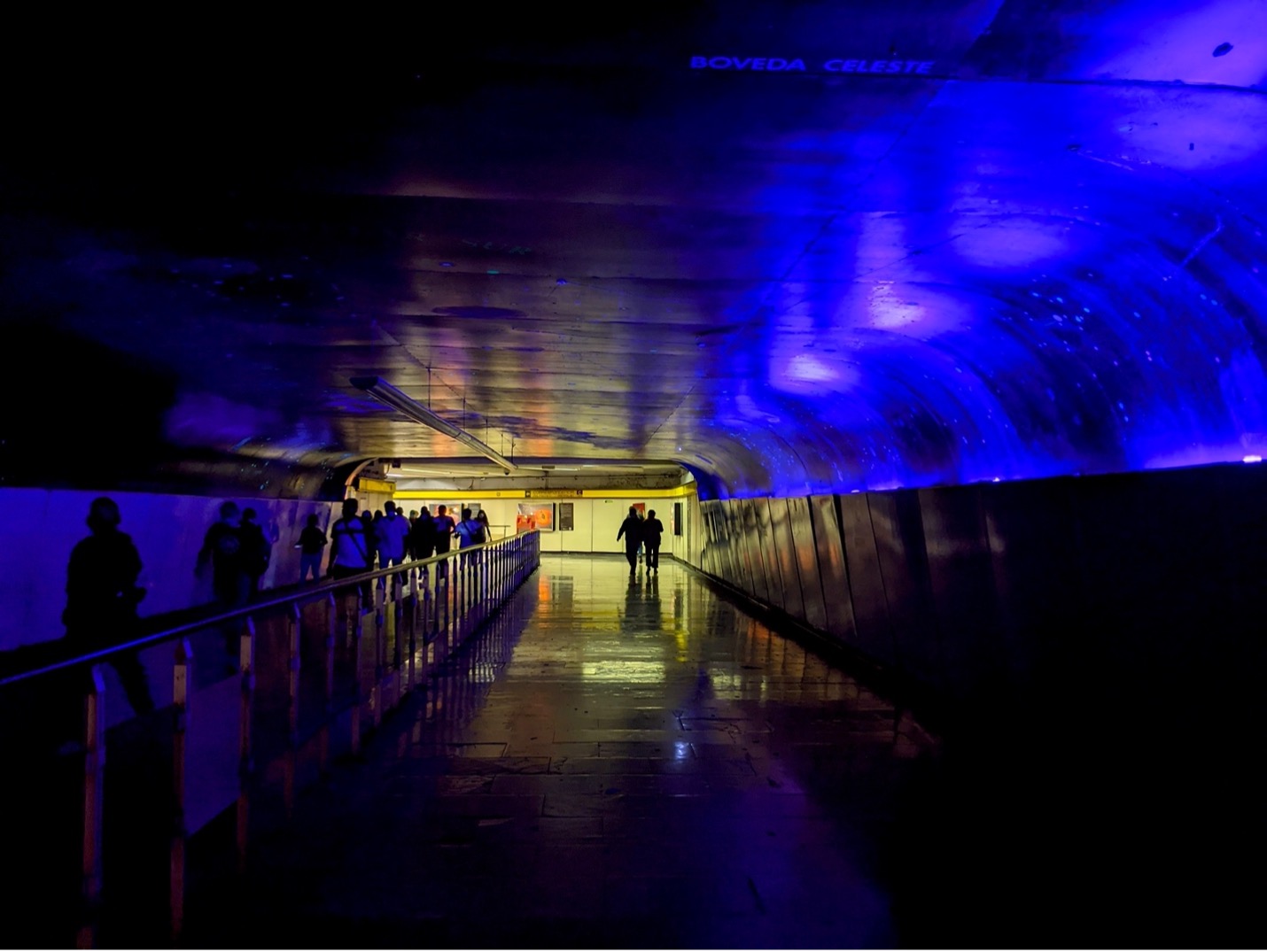
The CDMX metro system involves minimal stumbling around: ticket booths dot almost every station. Single tickets are available, and multiple-use passes can be loaded with 100 pesos (about $5). Since each trip costs just 5 pesos, many can be taken before the card requires feeding again. Probably best of all, one swipe at the first station entrance is all that is needed; another is unnecessary to change lines or exit at your destination. Push through the first turnstile and your pass can be safely stowed until the next time you plumb the concrete depths of the system.
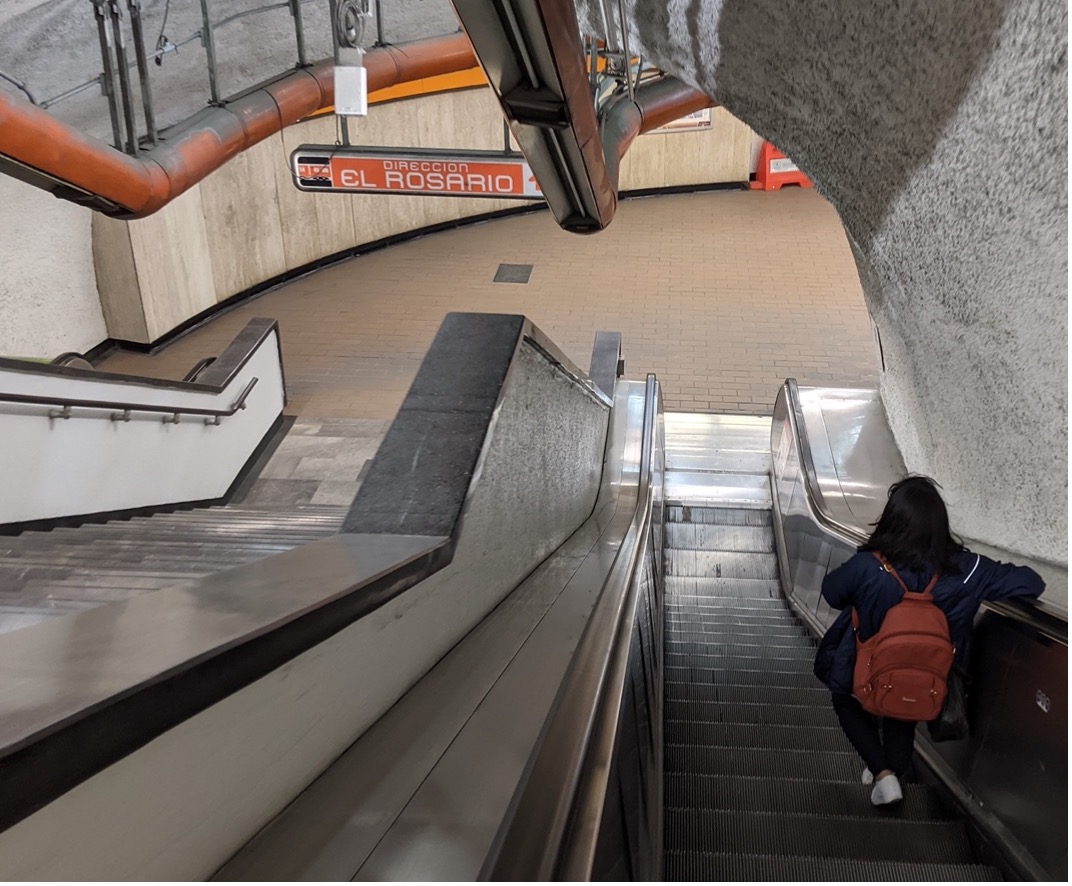
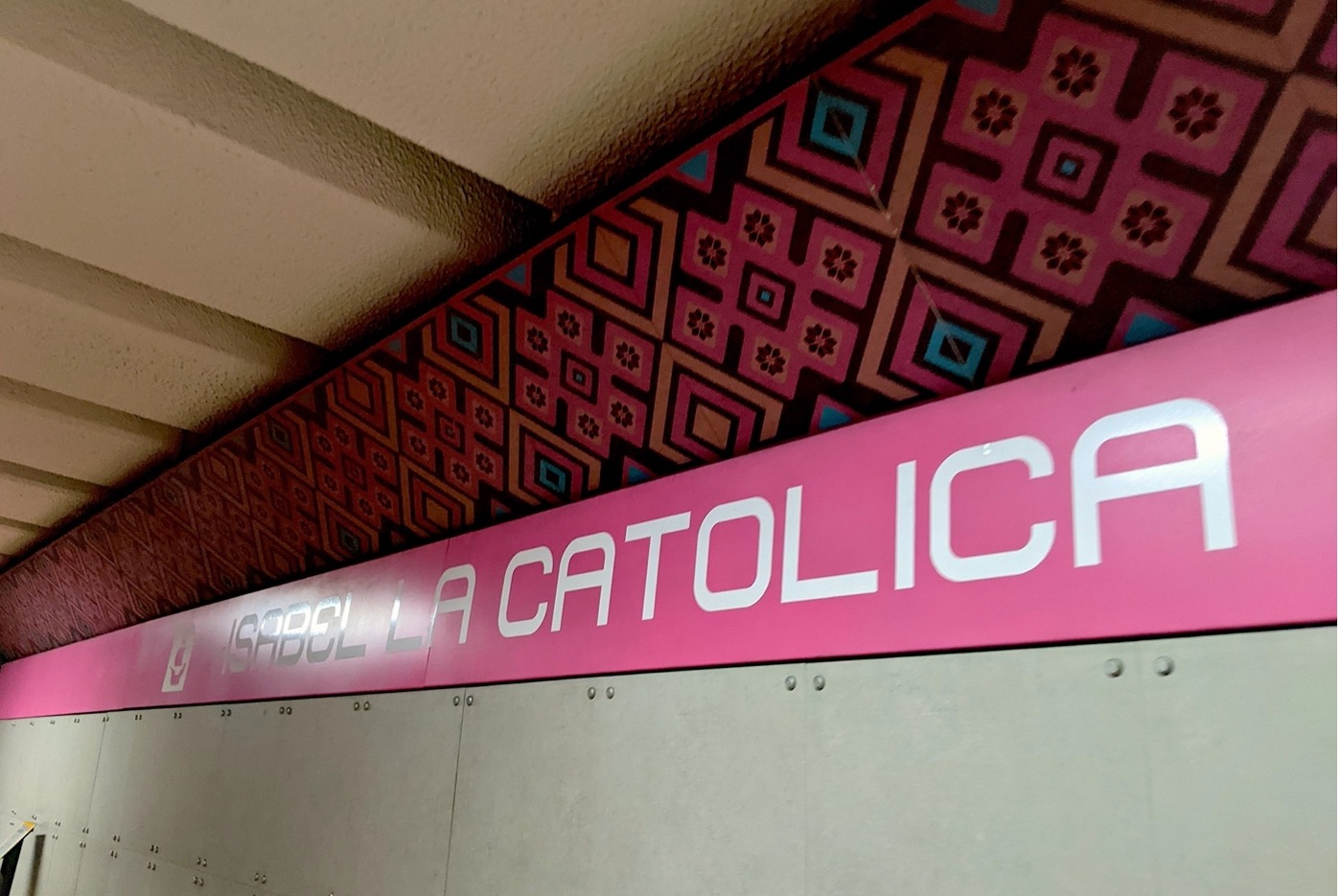
Interestingly, because Mexico City’s metro was established when much of the populace was illiterate, each station is labeled with a minimalistic symbol in the color of the line on which it sits. I’ve enjoyed learning the meanings behind each symbol, which can refer to anything from everyday items like fruits or animals to historical names and places. For example, to travel into the center, enter the system on the blue line at Nativitas (the Nativity), then head north to Chabacano (the apricot), where you connect to the brown line and travel to Chilpancingo (the hornet). If it’s rush hour, sometimes I feel appropriately hotheaded navigating the slow-moving crowds. To travel farther northwest in the center, change at Pino Suarez (a famous Mexican statesman) on the pink line instead and travel to Cuauhtémoc (a 15th century Aztec ruler of the great city of Tenochtitlan). One ride into town and you’ve had a mini tour through Mexico’s historical and cultural life.

https://www.hotfootdesign.co.uk/white-space/mexico-city-metro-icons

Like all major metro systems, the Mexico City subway has had its challenges. In 2012, the twelfth line was added, which has been plagued by serious problems ever since. As I write this, the news is continuing to report on the recent deadly accident on this line. A girder supporting an overpass on the line in the southeast of the city collapsed, killing 24 people and injuring more. Unfortunately, this was not completely surprising. Before this accident, concerns had been raised many times about the integrity of structures on this particular line, such as cracks that appeared after an earthquake in 2017.
This most recent accident was an incredible tragedy and one that many argue could have been avoided if more care was taken to address concerns. Unfortunately, incidents like this one and others in recent memory represent growing evidence of urban decay, not unlike that experienced by railroad lines today in the U.S. For a variety of reasons, too many governments have not been spending adequately on these public services. It is unfortunate, as such systems play a vital role in the transport of working professionals, goods and services in a way that is incredibly efficient. Metro systems also provide those unable to afford a car more opportunities for mobility, trade, and entertainment. Finally, these systems greatly reduce traffic congestion and pollution levels in cities everywhere.
Plus, they’re fun.
 CHLOE GOES
This is wonderful! I personally break into a cold sweat using metros, although I don’t let it stop me. Once I got lost on one in Germany while 8 months pregnant towing 2 children under 5. The very cool park across town was fun. The very, very, very long trip home was not. Lol.
Thanks for showing us the wonders of the world.
LikeLiked by 1 person
Hahaha oh noooo! I definitely understand the cold sweats of getting turned around. And I’ve never done it in those conditions!
Thanks for commenting!
LikeLike