That same week (see previous entry), John and I travelled to Cotonou, Benin, to meet up with Dan, the ELF currently serving there. Here’s a plug for John’s blog entry on this event too: https://johnpsimpson.wordpress.com/2015/03/29/been-in-benin-cotonou-ganvie/ .
We met up with my colleague Toto very early in the morning on Saturday, so that he could go with us to wrangle a taxi driver to take us across the border and on to the big city. We found an energetic man down at the “coast road” of Lome—the one that runs along the Atlantic. After learning he was waiting for other passengers so that his car would be completely full, we decided to pay for the extra seats so we could get going.

A word on the Togo/Benin border crossing: it’s quite a time consuming affair. We had to uncurl ourselves from the back of the Lome taxi car, grab our passports, and then be interviewed by a small panel of officers on the Togo side. They asked us where we were going, where we had come from, and the reason for our travel, etc. In response to each of our answers (and sometimes smiling amidst my halting French), they dutifully scrawled notes in a large weathered notebook that lay baring all in the midmorning sunshine. Then, we had to have our passports stamped, walk across the border, and then repeat the process on the Benin side. The process felt so tedious and so long I could almost feel my hair growing as we waited there.

But finally, two passports stamps richer, we were ready to be on our way. In the way of a morning snack, John waved to a woman who was selling freshly-picked coconuts on the side of the road, and we bought a couple. She hacked off the tops first, so we could drink out the juice. Then, she took her machete to the rest of it, making slices that we could then apply ourselves to. I was struck by the fact that the basket was so heavy that John had to help her pick up the basket again and put it on top of her head. This weight she carries around all day long—it’s so heavy she can’t herself even lift it.
The drive between the border and Cotonou was as dusty as a desert in the dry season. In addition, the stretch of road between the Togolese border and Cotonou is still under construction, so the trip across it feels more like off-roading for pleasure than a merely utilitarian point A-to point B endeavor. I watched as the driver rolled his windows up and down depending on how much dust we were driving through, and how he continually wiped tan-colored granules off his dashboard and front seat. His air-conditioning magically started working whenever he had to roll the windows up. I also chuckled at one point to notice a mechanic’s shop placed next to a particularly terrifying canyon in the road. It seemed to be enjoying a cracking trade.
But finally, the dirt gave way to concrete as we rolled into Cotonou, about three hours after leaving Lome. The Rough Guide to West Africa has this to say about Benin’s second city: “Though the population isn’t more than a million, the city spreads over a great reach of monotonously flat landscape, dotted with lakes and clogged with residential, commercial and administrative quartiers that run chaotically into one another.” Such an illustration matches with the impression Cotonou gives in the cold light of day. I was struck by how tan everything was—the dusty roads, the buildings, even the sky.
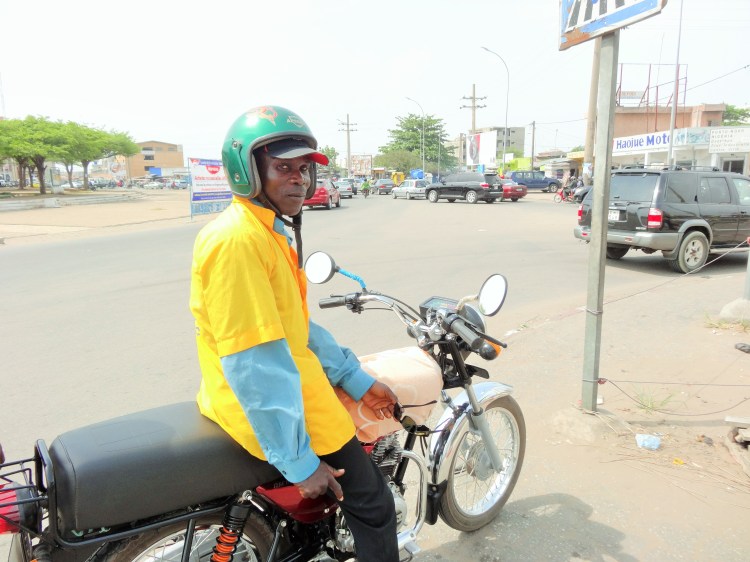
The hot sun beat down as we pulled into town, almost visibly bouncing off the streets, the sewer grates, and the brightly-colored helmets of the moto drivers. The traffic was much more sprightly here than in Lome; indeed there was simply much more of it. Both cars and motos swerved around each other through every street, and across each wide, traffic light-less intersection. In addition, John and I both picked up on a more palpable sense of desperation for commerce here than in Lome. The sense of poverty was a bit more apparent. At one point, after we were picked up by Dan in his car, a moto driver in front of us simply stopped moving—thus trapping us at an intersection so a posse of window washers could force us to use their services.
Still, I thoroughly enjoyed this adventure as well. Later that day, Dan took us on an exploration of the local markets in downtown Cotonou. I can safely say I have never experienced anything quite like this. Lome’s Grand Marche also had nothing on this place: how sprawling it was, how many vendors it included, and how we had to twist and turn our way through it like we had no intention of ever leaving. This was where the main seat of commerce was to be found in Cotonou. I couldn’t think about anything except the smells of everything as we wound our way through: freshly-caught fish, piles of ground nutmeg, pineapples, human feces, hibiscus flowers, bay leaves, body odor, frying onions. We had to sometimes turn sideways to avoid a cart being pulled or simply because the space between tables was so narrow. More than twice I heard the ubiquitous call of “Yovo yovo!” (white person). One girl grabbed my forearm and affixed me with a stormy stare—she wanted me to buy fabric. A woman walked by carrying a basketful of petulant chickens on her head. All in all, weaving through the market proved to be an overwhelming, exhilarating experience.
There were several moto rides involved in this visit too—here’s a quick video I took at one point.

I even snapped a shot of the driver after disembarking. I swear he was smiling when I raised the camera…
The next day brought another incredible experience. Not having very much planned for the day, John and I decided to check out a town nearby called Ganvié. It seemed to promise quite the unique experience.
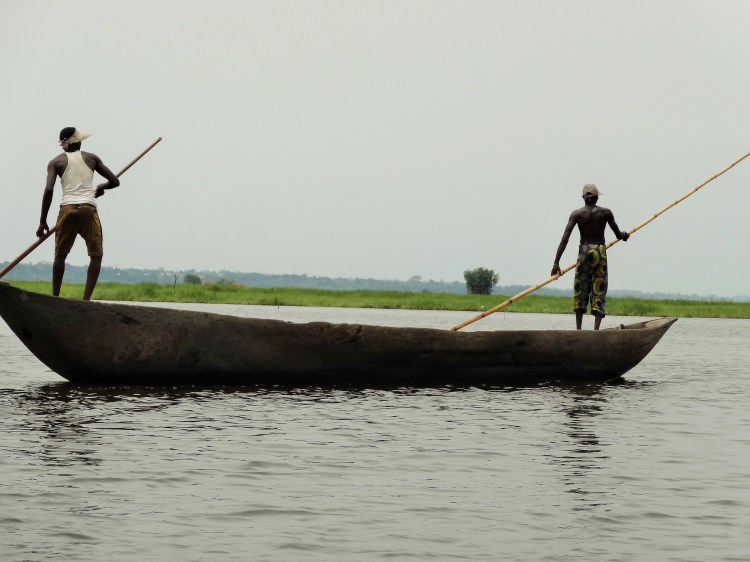
After a lunch at a roadside stand next to the docks, and an exhausting conversation with a tour guide about the covered (or not covered) nature of our boat, John and I climbed into a large pirogue. Two paddlers sat behind us, and one small boy reclined in the bow, seemingly nonplussed about yet another yovotour.

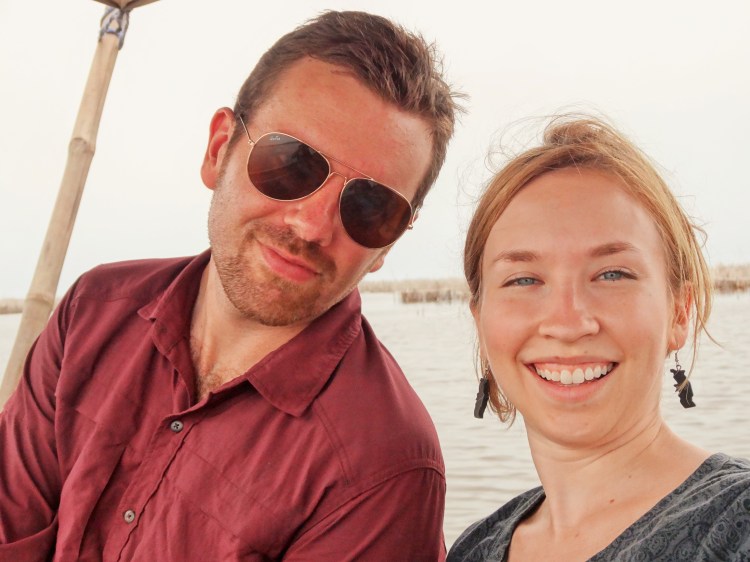
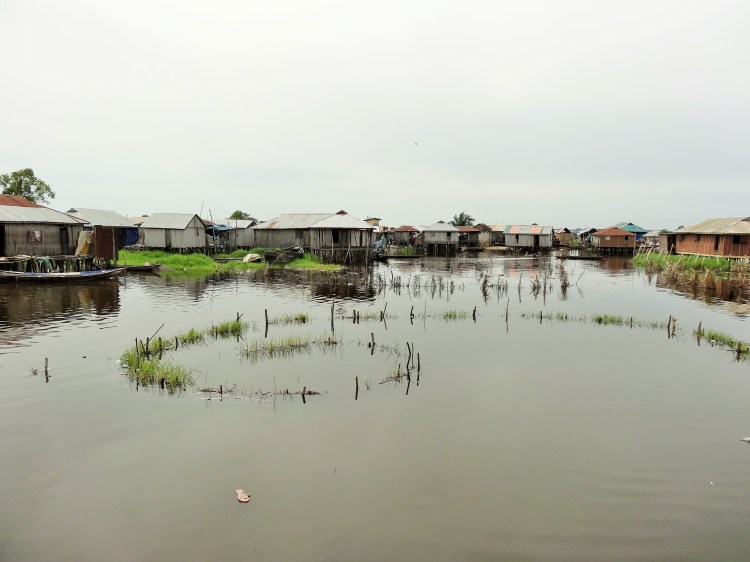
Equal parts lost in time and tourist attraction, Ganvié combines an out-of-the-way mysteriousness with an accessibility only possible because of the numerous hawkers of tours (and straw hats!) at the water’s edge. Basically, Ganvié is a village built entirely on a lake. Each structure has stilts that enables it to hover just above the lapping waters of Lake Nokoué, and the only form of transportation is by boat. The town has a fascinating history. It was established in the 16th century by a people called the Tofinu, who moved into the lagoon in an effort to avoid the raiders from European slave ships that frequented the area.
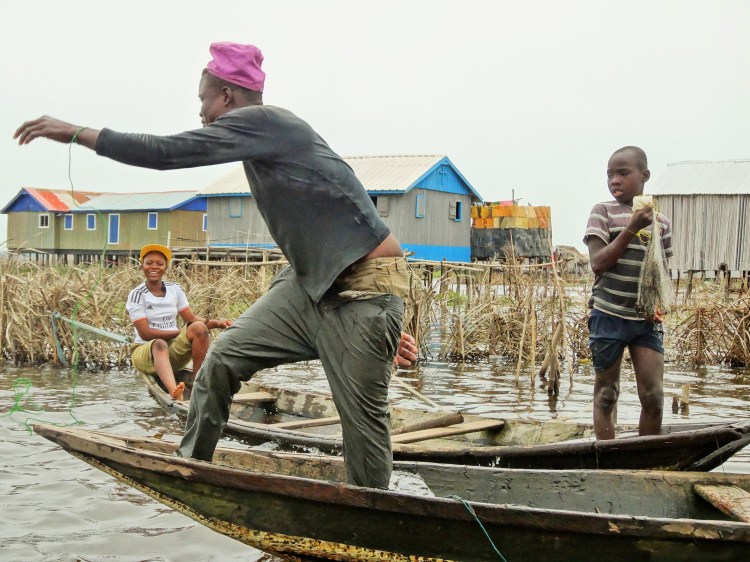
Other than tourism, the village’s main source of income is fishing. This was clear in the numerous sights John and I enjoyed of villagers hauling the waters for its prized resources.
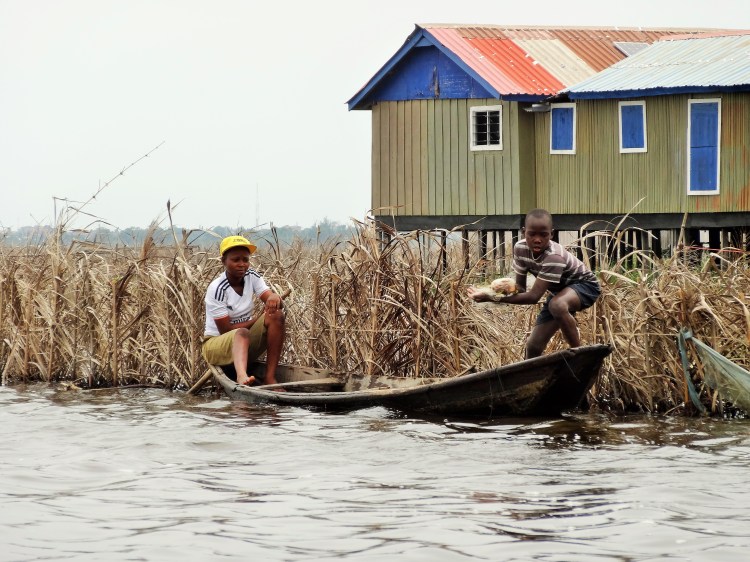
I was surprised to get a few smiles. Even though I reminded myself that many tourists come through here, it felt incredibly intrusive to be there, and especially to take photos.
In keeping with the slight tourist-trap nature of the experience, our pilots docked at a couple of shops along the way. I bought a shirt that had been decorated in the local design (I ignored that the inside tag read ‘H&M’).
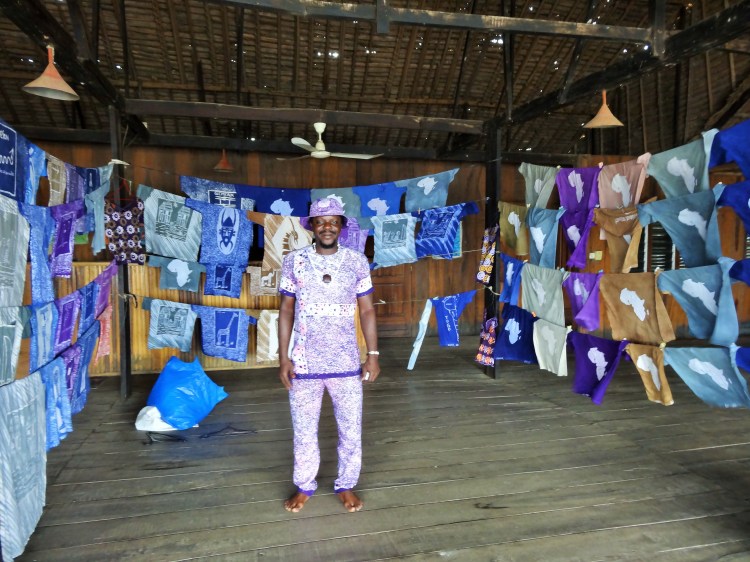
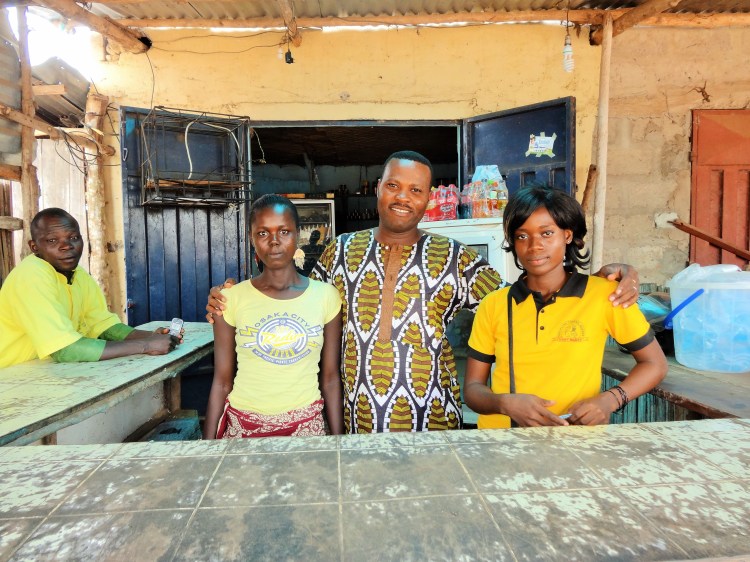
Towards the end of our journey through the town, we stopped at a little café for a Beninese drink with the owner, who pointed out that his home was just a stone’s throw away.

The cafe was a great place for soaking in the local scenery:
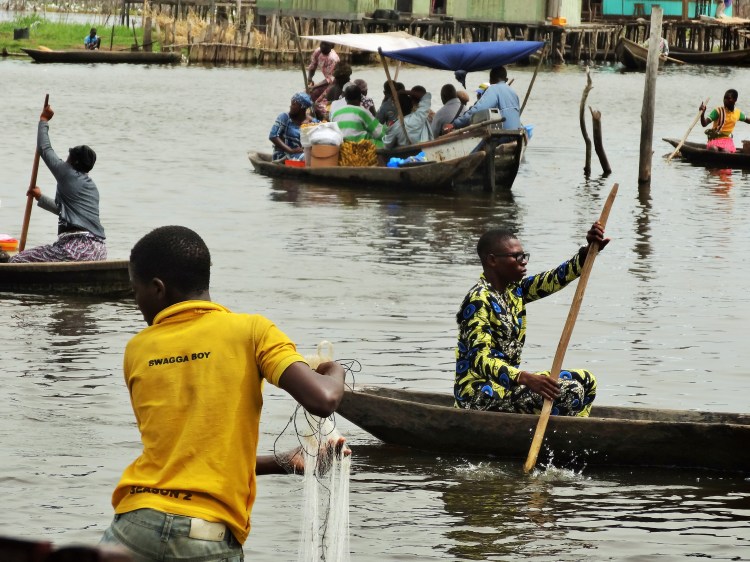
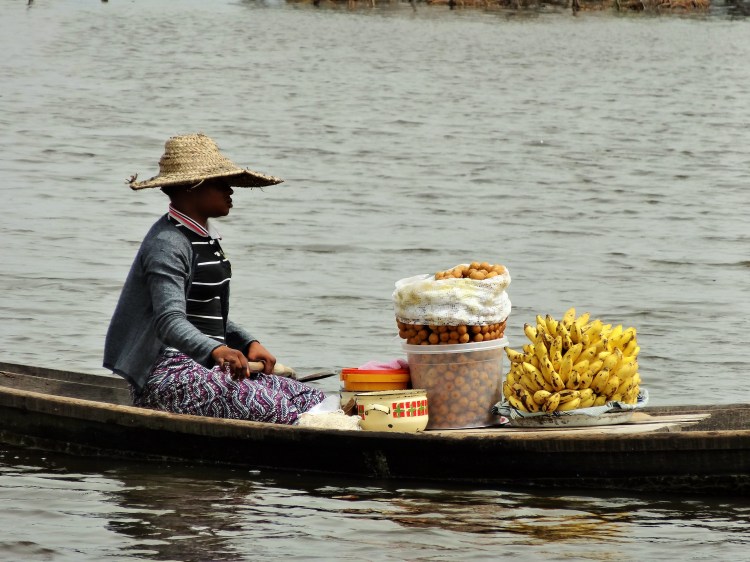
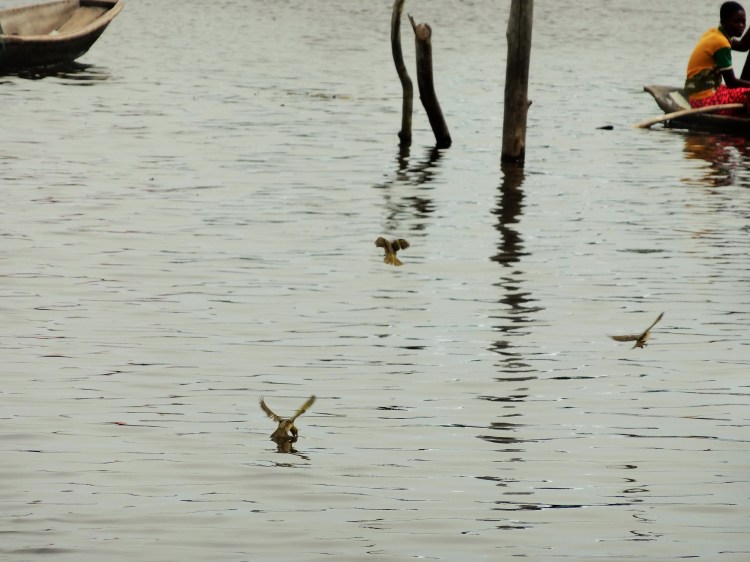
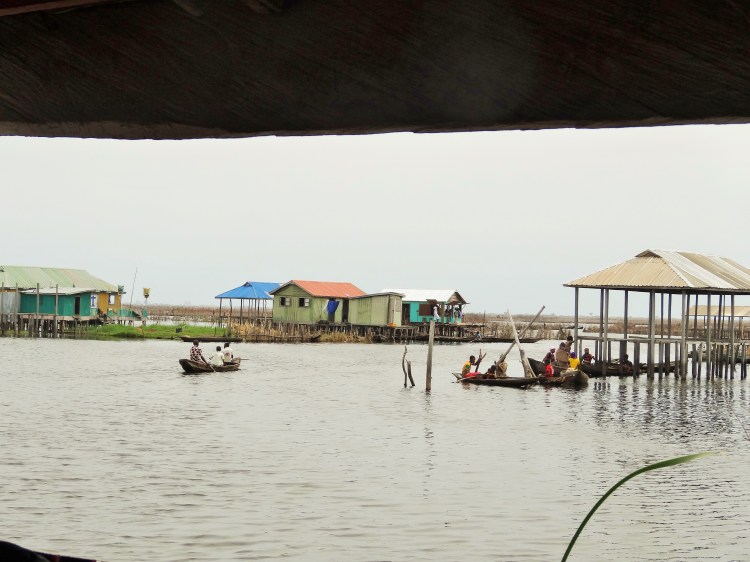
On the way back, we acquired a jolly priest:
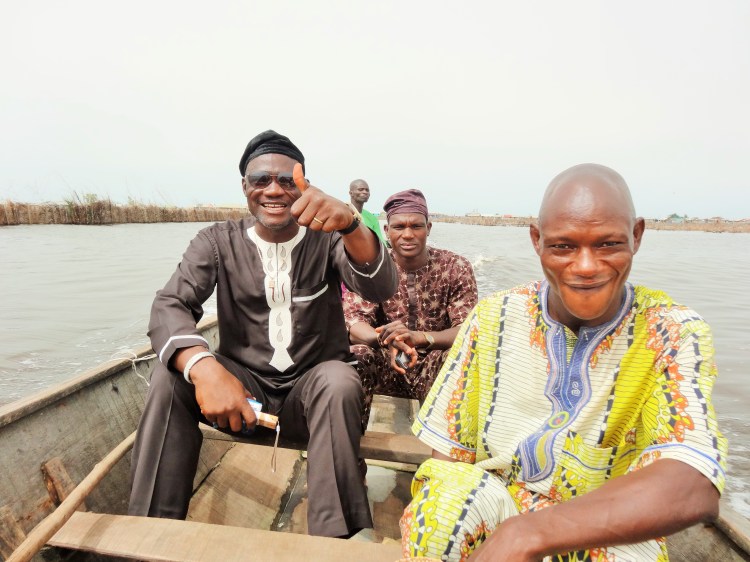
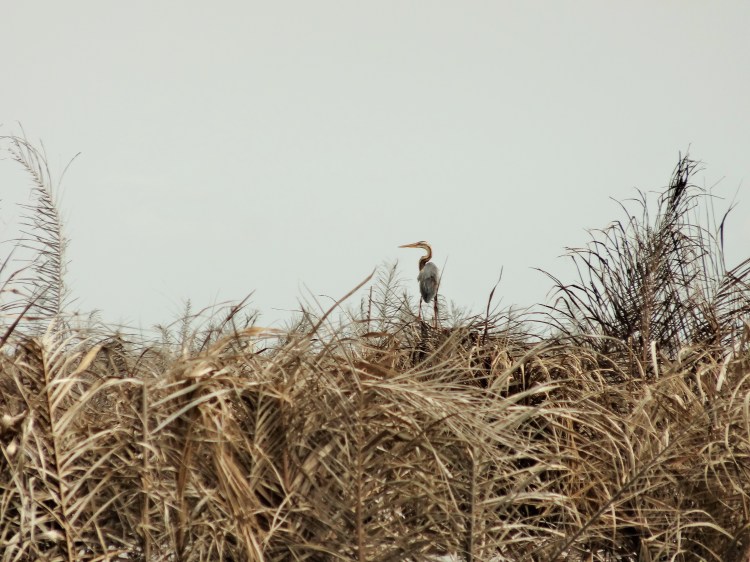
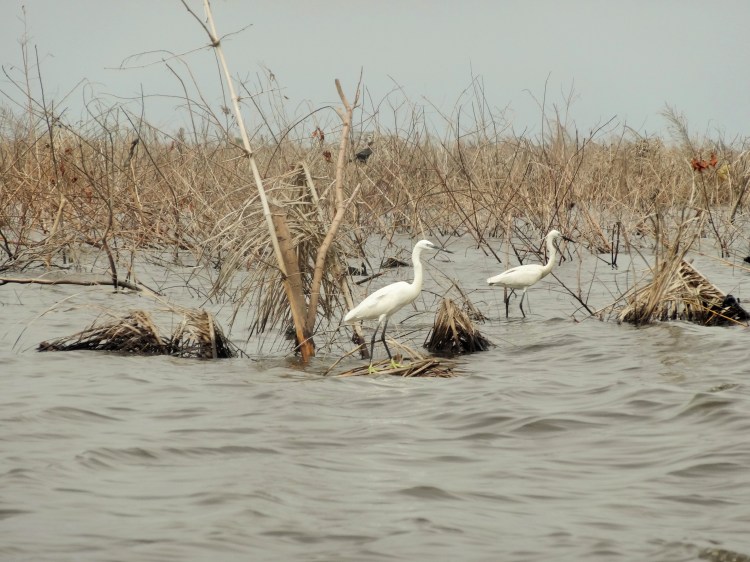
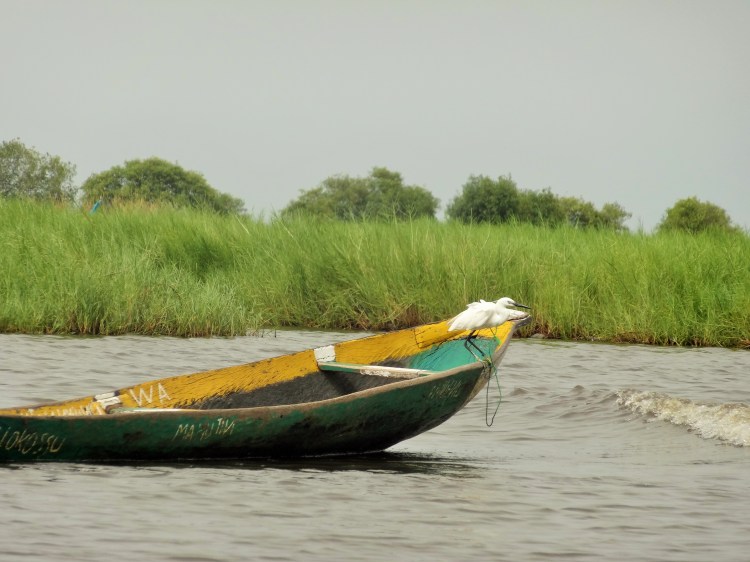
I enjoyed spotting so many water birds, including herons and cranes.
I highly recommend Ganvié. Even though other tourists had been there before me, I felt as though the citizens of the town had allowed us into their secret, secluded life and I was the richer for it.
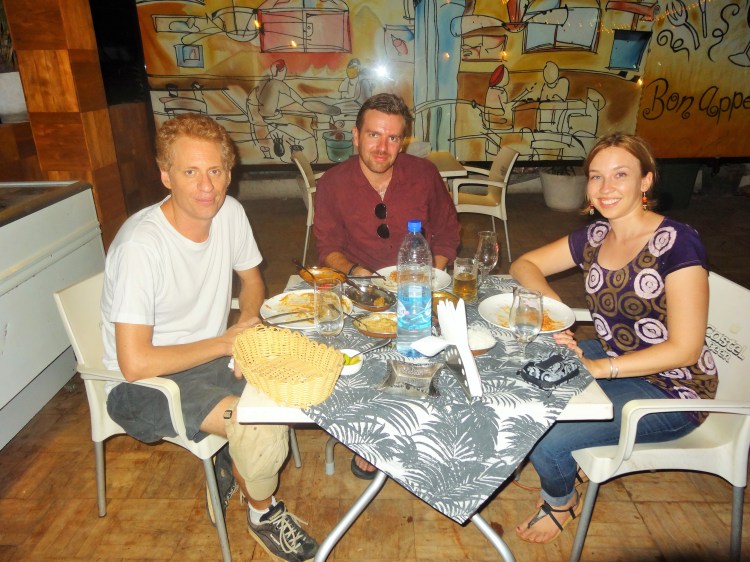
The rest of our time in Cotonou was a blast as well, and included everything from chatting with the Public Affairs Officer in his office after an embassy concert, to volleyball on the beach with Peace Corps volunteers, to a dinner of Indian food as three of the ELFs currently serving in West Africa.
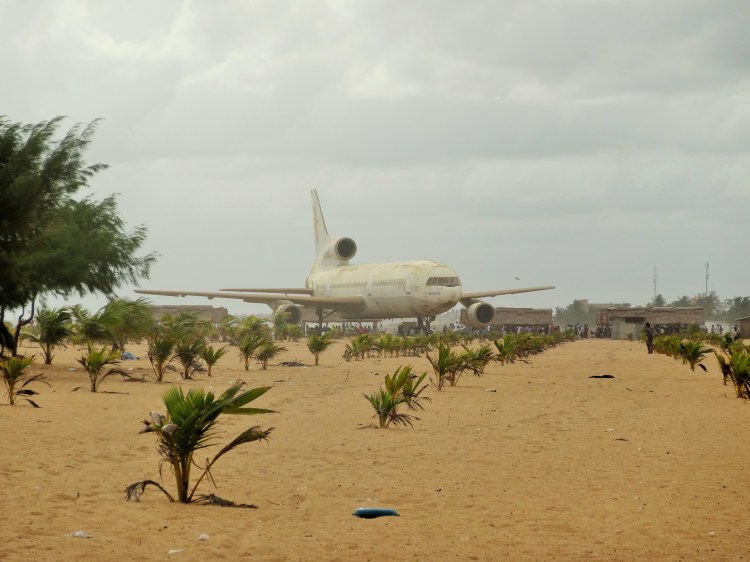
In closing, I will leave you with this photo of an airplane on a beach:
 CHLOE GOES
Awesome adventure! Loved reading about your excursion!
LikeLike
Love hearing about your adventure and can’t wait to see you and hear all the details.
LikeLike
Awesome! Chloe, I’ll travel with you again any day! 🙂
LikeLike
Again, I’m so amazed at what you’ve seen. I did not expect the “airplane on the beach” photo. lol
LikeLike